




Mrs. Anna Garton
Anna Garton is a Business Developer for the TexFoam Research-to-Business (R2B) project at Aalto University. With 10+ years in textiles circularity—including practical experience of upcycling and as Post-Consumer Textiles Expert using household separately collected textiles as feedstock across multiple processing methods. She leads stakeholder cooperation, partnerships, and ecosystem development to deliver practical impact. She is currently commercializing TexFoam, an open-loop, cross-sector innovation that leverages mixed textiles as a resource. Anna’s work bridges research and industry to accelerate market adoption of circular materials and build scalable value chains across sectors.

Professor Martin Charter
Martin Charter is the founding Director of The Centre Sustainable Design ® at the University for the Creative Arts (UCA) in 1995 where he has led a range of international, national and regional research projects focused on sustainable innovation and product circularity. With over 30 years experience, Martin has been a member of advisory boards covering sustainable innovation and design including P&G, InterfaceFlor and the World Resources Forum. Martin is the Chair of the Circular Economy Committee (CED/1) at BSI and UK chair/expert to many ecodesign standards (ISO14006:2020, IEC/ISO 62959:2019 and ISO TR 14062: 2001). Martin has organized awareness-raising events related to circularity regulations in the Indian fashion and clothing supply chain and has authored various books on business sustainability including most recently ‘Designing for the Circular Economy’ and ‘Accelerating Sustainability in Fashion, Clothing and Textiles’.

Heli Kangas
Heli Kangas is Development Manager at Valmet, focusing on textile recycling and recycled fiber solutions. She holds a Doctor of Science degree in Forest Products Chemistry and has more than 20 years of experience in biomaterials, sustainable fiber technologies, and circular economy innovation. Before joining Valmet, she held research and leadership roles at VTT Technical Research Centre of Finland, working on renewable materials and industrial innovation.
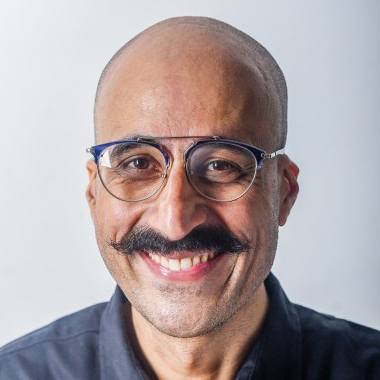
Pranav Khanna
Pranav Khanna has a background in Sustainability, Circular Fashion, Plastic waste, Crypto, and Climate action. Expertise includes running accelerators, grant programs, Go-to-market strategies, Community engagement and mobilization in the Web3 space, and business models at the intersection of 'Impact'( Climate) and Blockchain. Past work includes running Gitcoin Climate Rounds, ITS Accelerator, an India first Circular fashion platform, a Plastic Traceability startup, and the Premier Circular Design Fashion challenge Accelerator ( LFW ). Current work is at the intersection of Climate and Blockchain. His last role was Program Director, Venture Builder at Build3. I have also been a key contributor at the ReFi DAO community, and part of the Working group at Gitcoin Grants Climate Round.

Neha Gupta
Neha Gupta is a sustainability strategist, ecosystem builder, and entrepreneur driving circular transformation in the global textile and fashion industry with a Fashion Design degree from NIFT, a Master’s in Marketing from NMIMS, and a certification in Sustainability Assessment from IIT Bombay, she seamlessly blends creativity with strategic business acumen to drive impactful change. As Founder of the International Fashion Business Exchange Council (IFBEC), she leads cross-sector collaborations connecting industry, government, academia, and MSMEs to accelerate responsible business practices and circular economy adoption. Beyond IFBEC, she was the founder of Exchange4Fashion and E4F Ressurect, focused on circular textile solutions, and previously built Silhouette Designer Store, a platform supporting 250+ fashion entrepreneurs and designers.
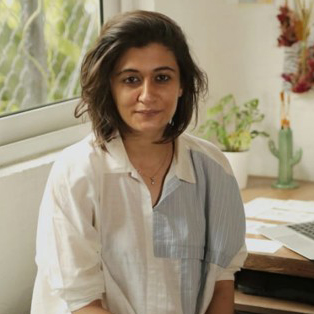
Kriti Tula
A trained apparel designer and design manager, Kriti has worked in the global apparel industry for more than 10 years. After Pursuing her under grad. at pearl academy in Fashion Designing in 2010 and working in the Indian fashion industry for several years; she moved to London for her masters in Design management on a full scholarship at London college of fashion. After her post graduation, she got a chance to work in London for a few years before coming back to India to expand her label Doodlage. She is the creative brain behind Doodlage. Her journey in sustainable fashion started very early on and has won her many awards and accolades for upcycled, recycled and ethically made fashion. Kriti started the conversation around sustainable fashion in India in 2012. Her work focuses on creating awarness around the need for alternate fashion economies. With Doodlage her aim is to create India's first global sustainable and affordable fashion brand; focussing on reselling, repair and upcycling while including ethically made recycled fabrics. While her work has been covered by many global organisations like Duetsche Welles, Brut, Apple Inc, fashion revolution, sophie australia. Doodlage is equally publicised by media in India and has grown to be one of the most acknowledged and credible brands for sustainable fashion in India.

Dr. Megha Phansalkar
Dr. Megha Phansalkar is an Urban and Regional Planner and social entrepreneur with over 30 years of experience in community-driven rural development, water governance, and livelihoods. She is the Founder and Managing Director of Tisser Artisan Trust, an enterprise impacting 100,000+ artisans across Pan India. Her background spans 18 years with the World Bank, steering committee leadership at WSSCC/UNOPS Geneva, and institutional governance roles with Catalyst 2030. Holding a Ph.D. in Resource Planning and a Master’s from CEPT University, she served as Visiting Professor at ATLAS SkillTech University and advises multiple academic and development boards.


Shilpi Kapur, Senior Director
Environmental Management Centre Pvt. Ltd.
Email: shilpi.kapur@emcentre.com
Phone: +91 99100 53404
https://emcentre.com/

Paula Fontell, Founder & Principal Consultant
Ethica Finland
Email: paula.fontell@ethica.fi
Phone: +358 40 768 0160
https://www.ethica.fi/